

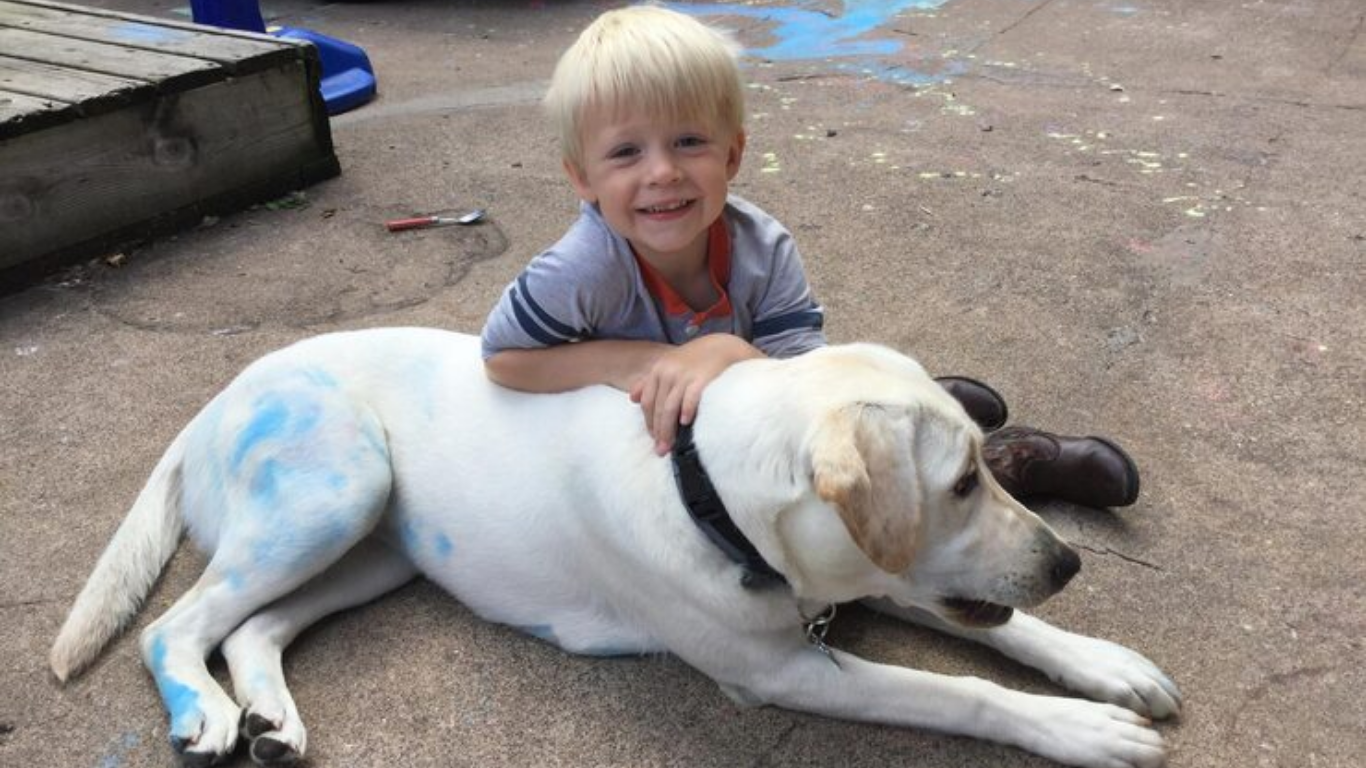
For a child with Down syndrome, a dog can be more than just a pet; it can be a constant friend, a patient teacher, and a furry guardian. Imagine a nonverbal child who finds their voice to give a simple command to a loving Labrador, or a child prone to anxiety who finds immediate calm by stroking a Golden Retriever’s soft fur. These moments are not just heartwarming, they are transformative. This article explores how dogs for down syndrome can significantly improve the lives of children with Down syndrome, identifies the best breeds for this important role, and explains how to train them to meet specific needs.
Can Dogs Have Down Syndrome?
You may have seen images online claiming to show a “dog with Down syndrome,” often featuring animals with flattened faces or wide-set eyes. This has led to a common misunderstanding. It is important to clarify that Down syndrome is a uniquely human condition. It occurs when an individual is born with an extra copy of chromosome 21.
According to veterinary experts, dogs cannot have Down syndrome because their genetic structure is entirely different from humans. Dogs have 39 pairs of chromosomes, while humans have 23. Therefore, they cannot have a trisomy of chromosome 21. However, dogs can be born with other genetic abnormalities or congenital conditions that may result in physical and cognitive traits that some people mistakenly associate with Down syndrome in humans. These conditions can include pituitary dwarfism, congenital hydrocephalus, or other chromosomal defects, but they are not the same as Down syndrome.
How Dogs Help Children with Down Syndrome
The bond between a child and a dog can be powerful, and for children with Down syndrome, the benefits are even more profound. These four-legged friends offer support that extends across emotional, physical, and social development.
A dog’s unconditional love provides a source of constant companionship, which can be incredibly comforting and help reduce feelings of anxiety and loneliness. The simple act of petting a dog can lower stress levels and create a sense of calm. This emotional stability helps children feel more secure as they navigate social situations, and a dog can act as a social bridge, making it easier for a child to interact with peers.
Beyond emotional support, dogs encourage physical activity. Tasks like walking the dog, throwing a ball, or engaging in playtime get children moving, which helps improve their muscle tone and coordination. Simple actions such as brushing a dog’s coat or fastening a leash can also help develop fine motor skills.
Interacting with a dog also nurtures cognitive and social growth. Caring for a pet teaches responsibility, as children learn to help with feeding, grooming, and walking. This routine fosters a sense of purpose and discipline. It also helps them develop empathy, as they learn to recognize and respond to their dog’s needs. Furthermore, giving commands to a dog and receiving a response can build a child’s confidence and improve their communication skills.
Best Dog Breeds for Children with Down Syndrome
When choosing a dog for a child with Down syndrome, temperament is the most critical factor. The ideal dog should be patient, gentle, trainable, and sociable. While any dog with the right personality can be a wonderful companion, certain breeds are well-known for possessing these key traits.
Golden Retrievers are renowned for their gentle nature and patience, making them excellent family pets, especially for households with children. They are intelligent and eager to please, which simplifies training.
Labrador Retrievers are another top choice. Similar to Goldens, they are famously friendly, reliable, and highly trainable. Their steady temperament and loving disposition make them a safe and supportive companion for children with special needs.
For families looking for a smaller dog, the Cavalier King Charles Spaniel is an exceptional option. These dogs are affectionate, gentle, and have a calm demeanor. Their small size makes them easy to manage, and they thrive on being close to their human companions.
Poodles, available in standard, miniature, and toy sizes, are highly intelligent and trainable. Their hypoallergenic coat is also a major advantage for families with allergies. Their ability to learn complex tasks makes them a great fit for a therapy or service dog role.
Beagles are sociable, affectionate, and generally good-natured. Their friendly personality and manageable size make them a popular choice for families. They form strong bonds and enjoy being part of the pack.
Service and Therapy Dogs
While a well-behaved family pet offers many benefits, a trained service or therapy dog can provide an even greater level of support for a child with Down syndrome. It’s important to understand the distinction between these roles.
A service dog is individually trained to perform specific tasks that assist a person with a disability. For a child with Down syndrome, a service dog could be trained to interrupt repetitive behaviors, provide deep pressure therapy to calm anxiety, or alert parents if the child wanders. These dogs are granted public access rights under the Americans with Disabilities Act (ADA).
A therapy dog is trained to provide comfort and affection in clinical or therapeutic settings, such as schools, hospitals, or at home. While they do not have the same public access rights as service dogs, their presence can be instrumental in a child’s therapeutic progress. Organizations like 4 Paws for Ability and Service Dogs for America have programs dedicated to training dogs to assist children with a wide range of needs.
How to Choose the Right Dog for Your Family
Selecting the right dog requires careful consideration of your family’s lifestyle and your child’s specific needs. Think about your living situation—do you have a large, fenced yard, or do you live in an apartment? Your family’s activity level is also important. An active family might be a great match for a Labrador, while a quieter household might be better suited for a Cavalier King Charles Spaniel.
Matching the dog’s temperament to your child’s personality is crucial. A high-energy child might do well with a playful dog, while a more reserved child may benefit from a calmer, more nurturing companion. Whether you choose to adopt from a shelter or work with a reputable breeder, focus on finding an animal with a gentle and predictable personality. When adopting, shelter staff can often provide valuable insight into a dog’s history and temperament.
Consulting with a professional dog trainer or a service dog organization can also be beneficial. They can help assess your child’s needs and guide you toward a dog with the right disposition and potential for training.
Training a Dog for a Child with Down Syndrome
All dogs benefit from basic obedience training, and this foundation is especially important when the dog will be interacting with a child with special needs. Start with fundamental commands like “sit,” “stay,” and “come.” Involve your child in the training process as much as possible to help build a strong bond and establish their role as a leader.
For more specific needs, you may want to pursue specialized training. A dog can be taught to provide calming pressure during an emotional outburst or to nudge a child as a reminder to complete a task. This level of training often requires professional guidance. A certified dog trainer or a service dog organization can help you develop a training plan tailored to your child’s unique challenges. This training reinforces the dog’s role as a supportive partner, enhancing the child’s independence and well-being.
Legal and Practical Considerations
If you have a service dog, it is important to understand your rights. The Americans with Disabilities Act (ADA) ensures that service dogs are allowed in public places where pets are typically not permitted. It’s important to note that emotional support animals and therapy dogs do not have the same legal protections under the ADA.
The financial commitment is another key consideration. The cost of acquiring and training a service dog can range from $15,000 to $30,000, though some non-profit organizations provide them at a lower cost to eligible families. Pet health insurance may help manage veterinary expenses, but it typically does not cover the cost of training. Ongoing care, including food, grooming, and regular vet visits, is also a lifelong expense that should be factored into your budget.
Stories of Success
Countless families have witnessed the life-changing impact a dog can have on a child with Down syndrome. There are stories of nonverbal children who began speaking their first words to their canine companion, and tales of children who overcame social anxiety with their loyal dog by their side. These relationships are built on a foundation of unconditional acceptance and love. The bond that forms between a child with Down syndrome and their dog is often one of the most profound and meaningful connections in their life, providing years of joy, comfort, and unwavering friendship.
You would also like this: “how many teeth do dogs have“
Find a Friend for Your Child
Dogs offer far more than just companionship for children with Down syndrome. They are partners in growth, providing emotional, physical, and social support. From encouraging physical activity to fostering empathy and responsibility, the benefits are immeasurable. A dog can be a steadying presence in a child’s life, helping them build confidence and connect with the world around them.
If you are considering adding a dog to your family, explore the options available to you. Research reputable breeders, visit local shelters, or contact a service dog organization in your area to learn more. The right furry friend could make an incredible difference in your child’s life.
Frequently Asked Questions
What is the best dog for a child with Down syndrome?
The best dog is one with a calm, gentle, and patient temperament. Breeds like Golden Retrievers, Labrador Retrievers, and Cavalier King Charles Spaniels are often recommended. But an individual dog’s personality is more important than its breed.
Can a family pet be trained as a therapy dog?
Yes, a family pet with the right temperament can undergo training to become a therapy dog. This usually involves working with a professional trainer to teach the dog how to provide comfort and support in various situations.
What is the difference between a service dog and a therapy dog?
A service dog is trained to perform specific tasks to help a person with a disability and has public access rights under the ADA. A therapy dog is trained to provide comfort and affection and does not have the same legal protections for public access.
How much does a service dogs for down syndrome cost?
The cost can vary significantly, often ranging from $15,000 to $30,000. However, many non-profit organizations provide service dogs to families at a reduced cost or through fundraising programs.
Are there organizations that provide dogs for children with Down syndrome?
Yes, organizations like 4 Paws for Ability, Service Dogs for America, and Canine Companions for Independence train and place service dogs with children. Who have a variety of needs, including Down syndrome.
How can a dog help with my child’s speech development?
A dog can motivate a child to communicate. Children may practice giving commands, talking to the dog, or reading to their furry friend in a judgment-free environment. Which can help build confidence and improve speech skills.